Your companion in navigating the sensory environment
SpectrumScan combines real-time light and sound measurements with a crowdsourced sensory map to help you navigate the world with more confidence.

Sensory overload is invisible. Its impact isn't.
When you're sensitive to light or sound, going somewhere new can involve a lot of guesswork. Will the restaurant be too loud? Will the lights be overwhelming? Will there be somewhere quieter if you need it?
Today, there's often no way to know until you're already there.
SpectrumScan makes the sensory environment visible; giving you more information before you go and while you're there.
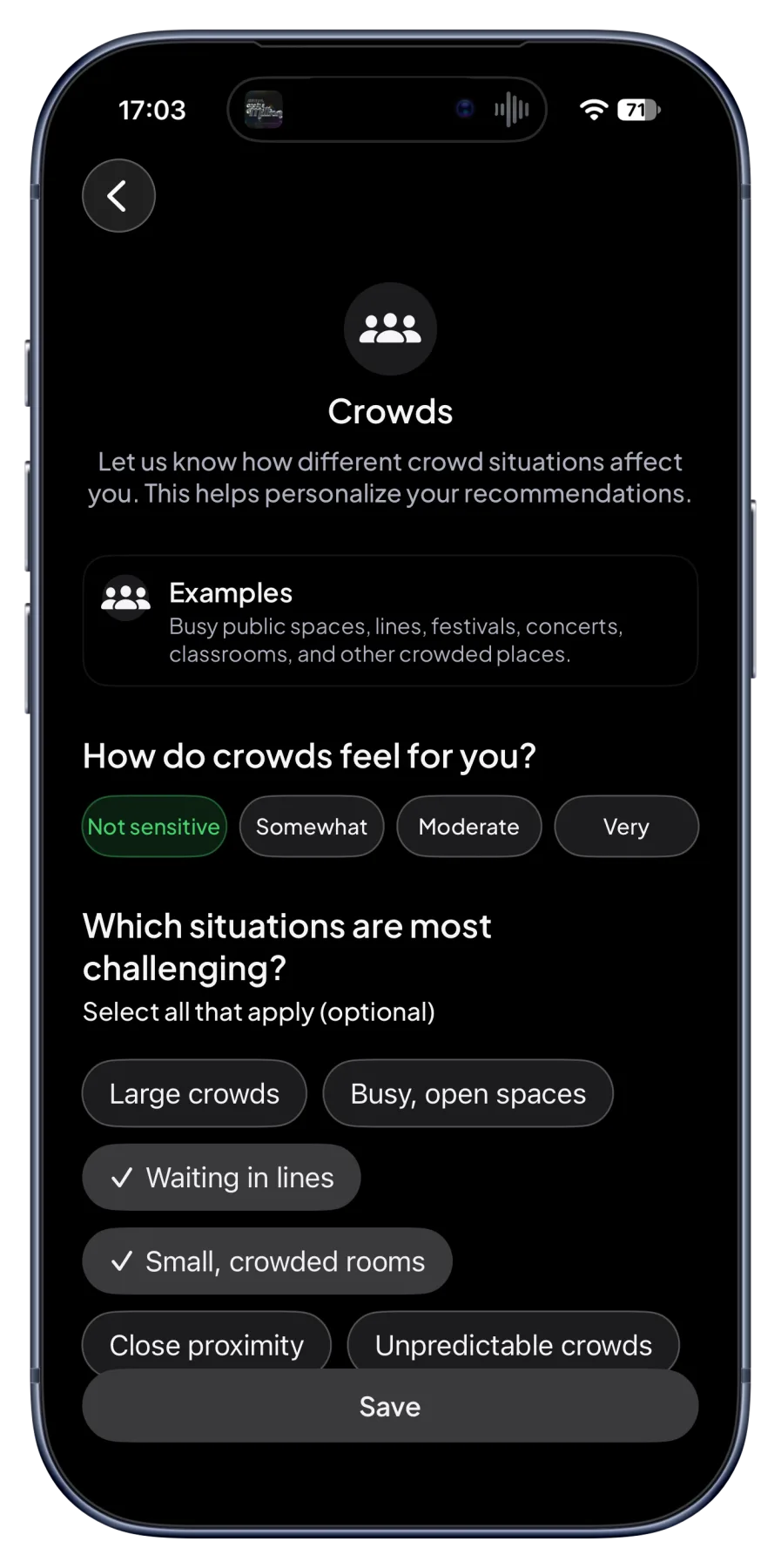
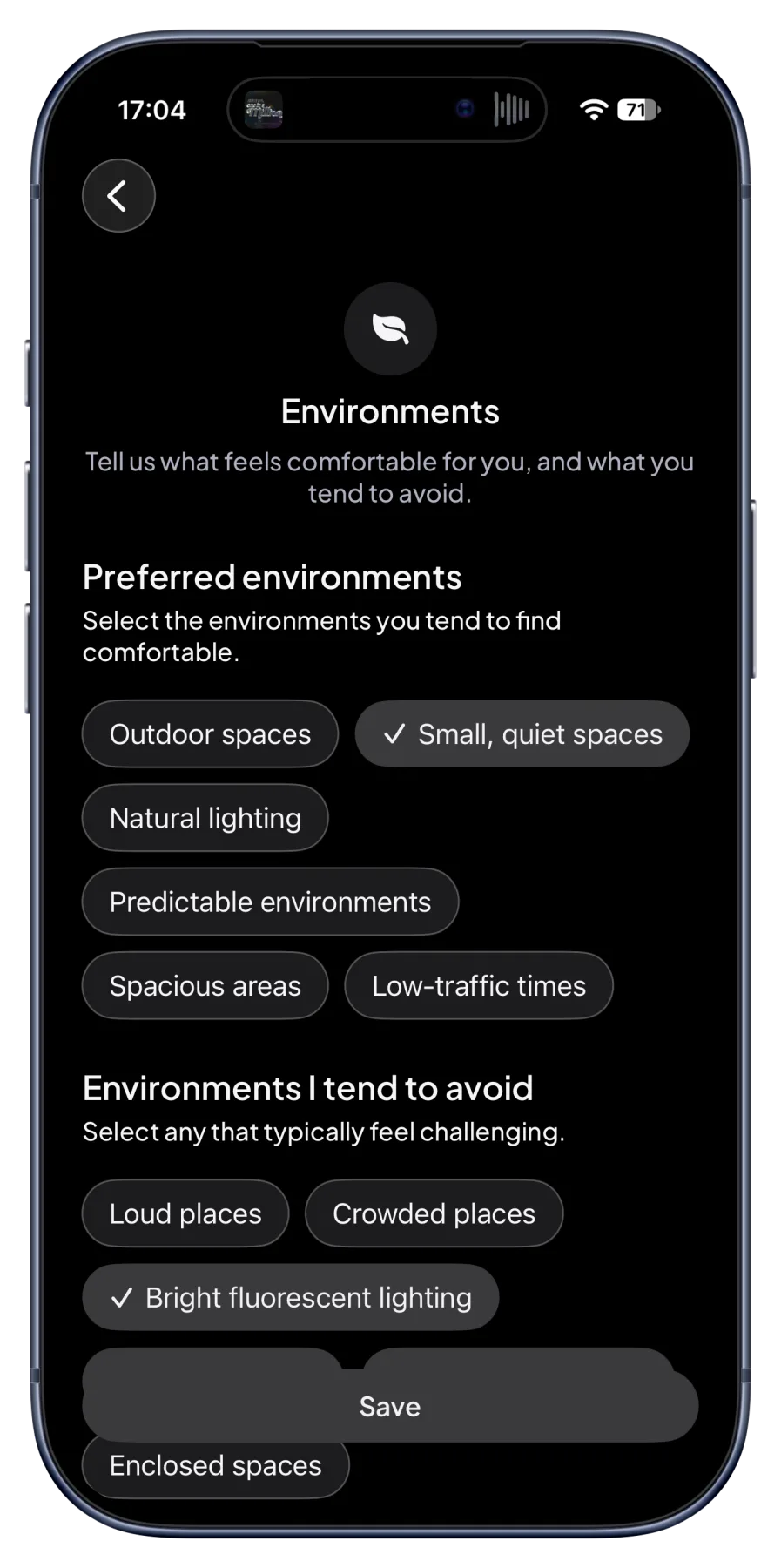
Real-Time Sensory Monitor
Understand your sensory environment
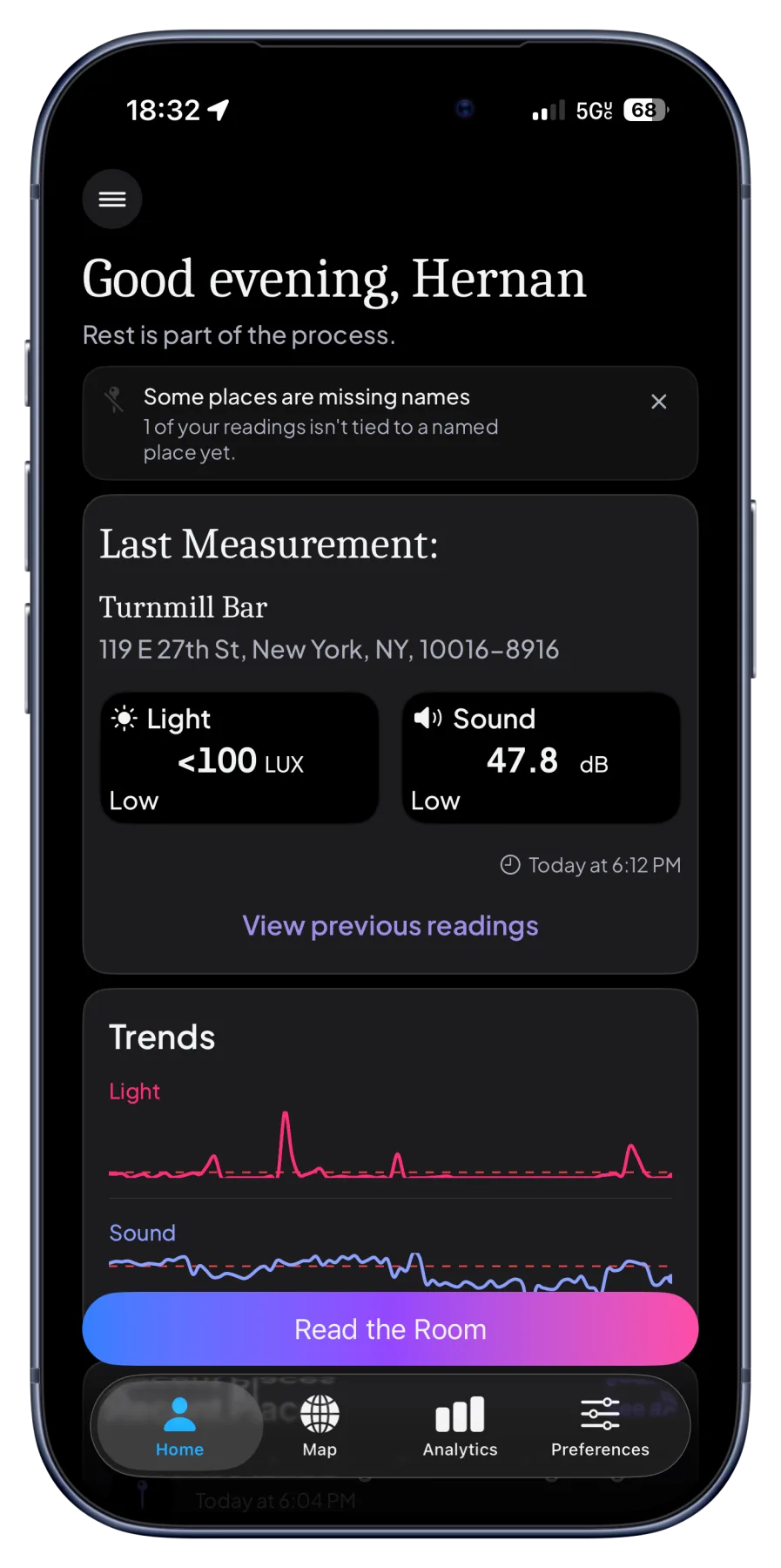
SpectrumScan uses your phone to measure light and sound levels in real time, helping you better understand the sensory environment you're in.
- Measure sound: See the sound levels around you and better understand how noisy your environment is
- Measure light: See the light levels around you and identify environments that may be brighter or dimmer than you prefer
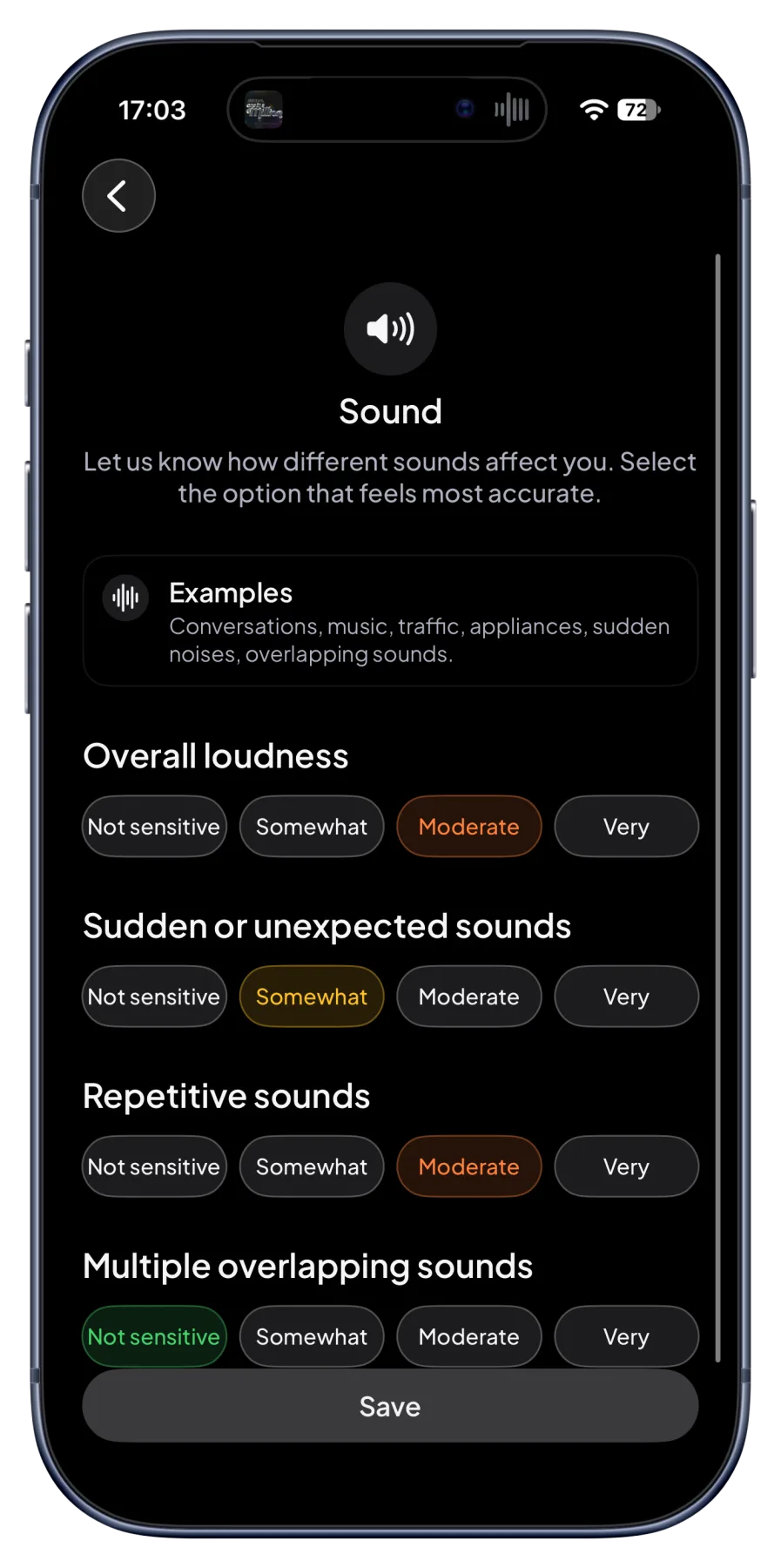
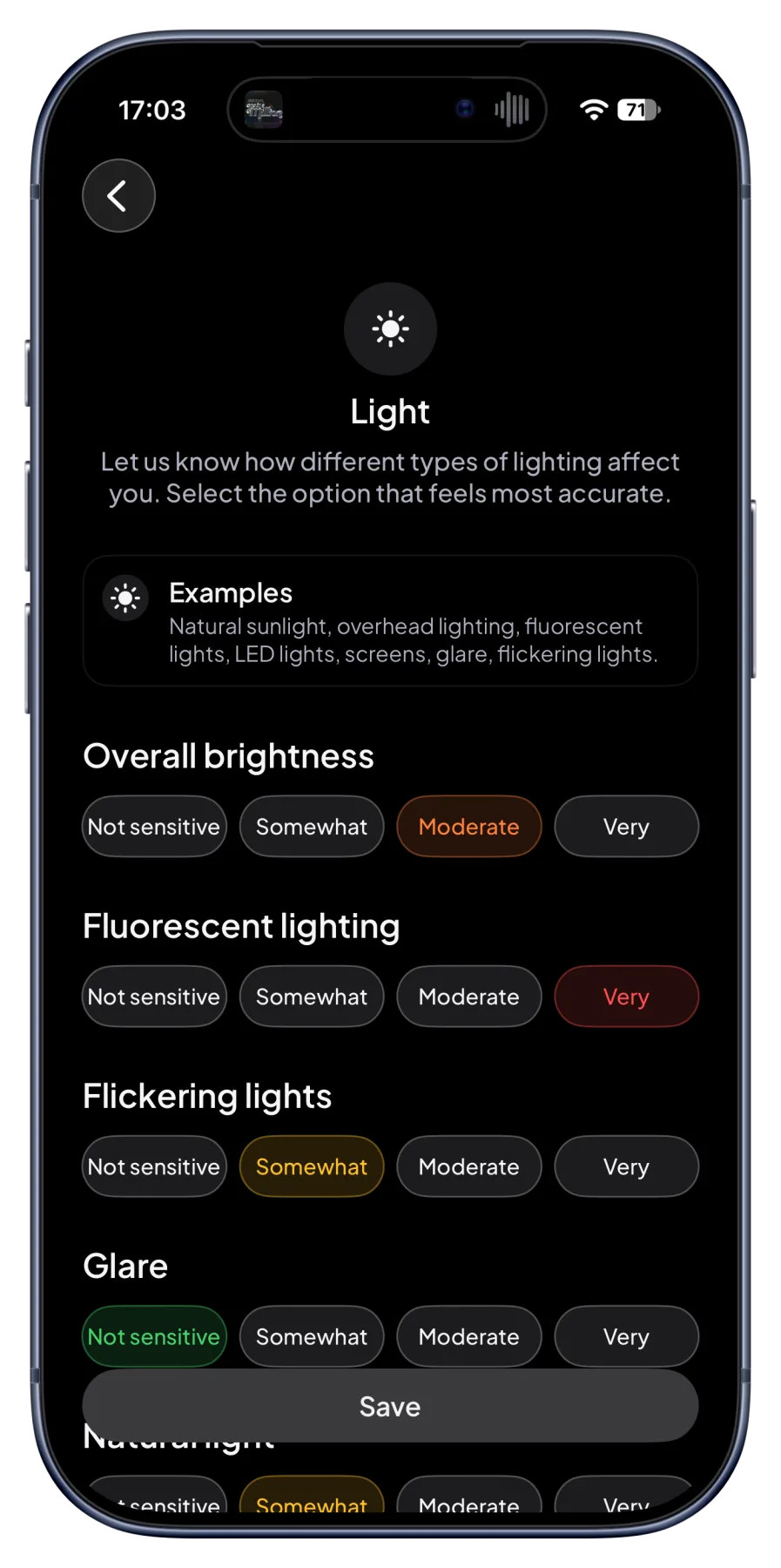
- Learn what works for you: Connect information about your surroundings with your own experience to better understand your sensory preferences
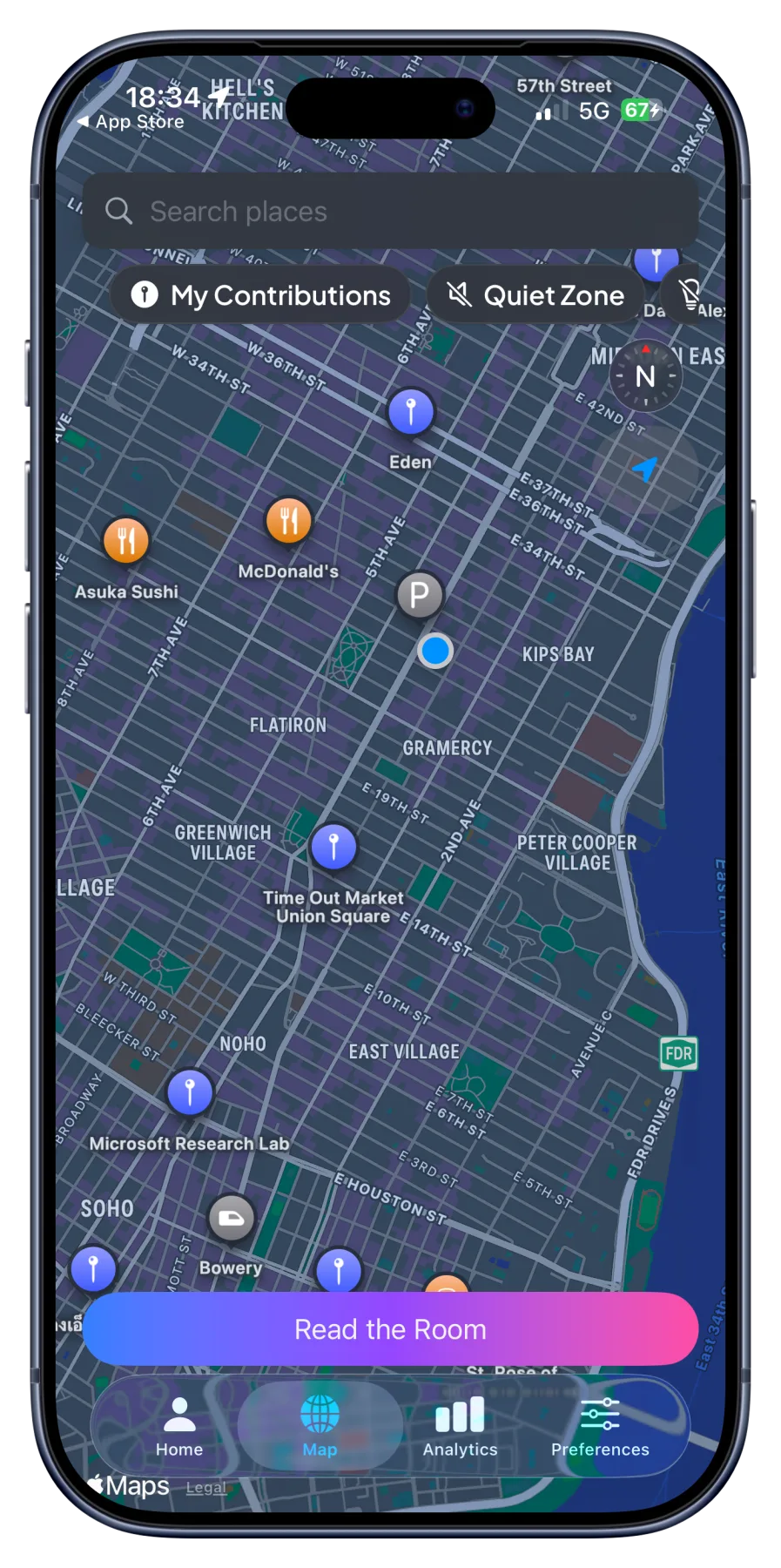
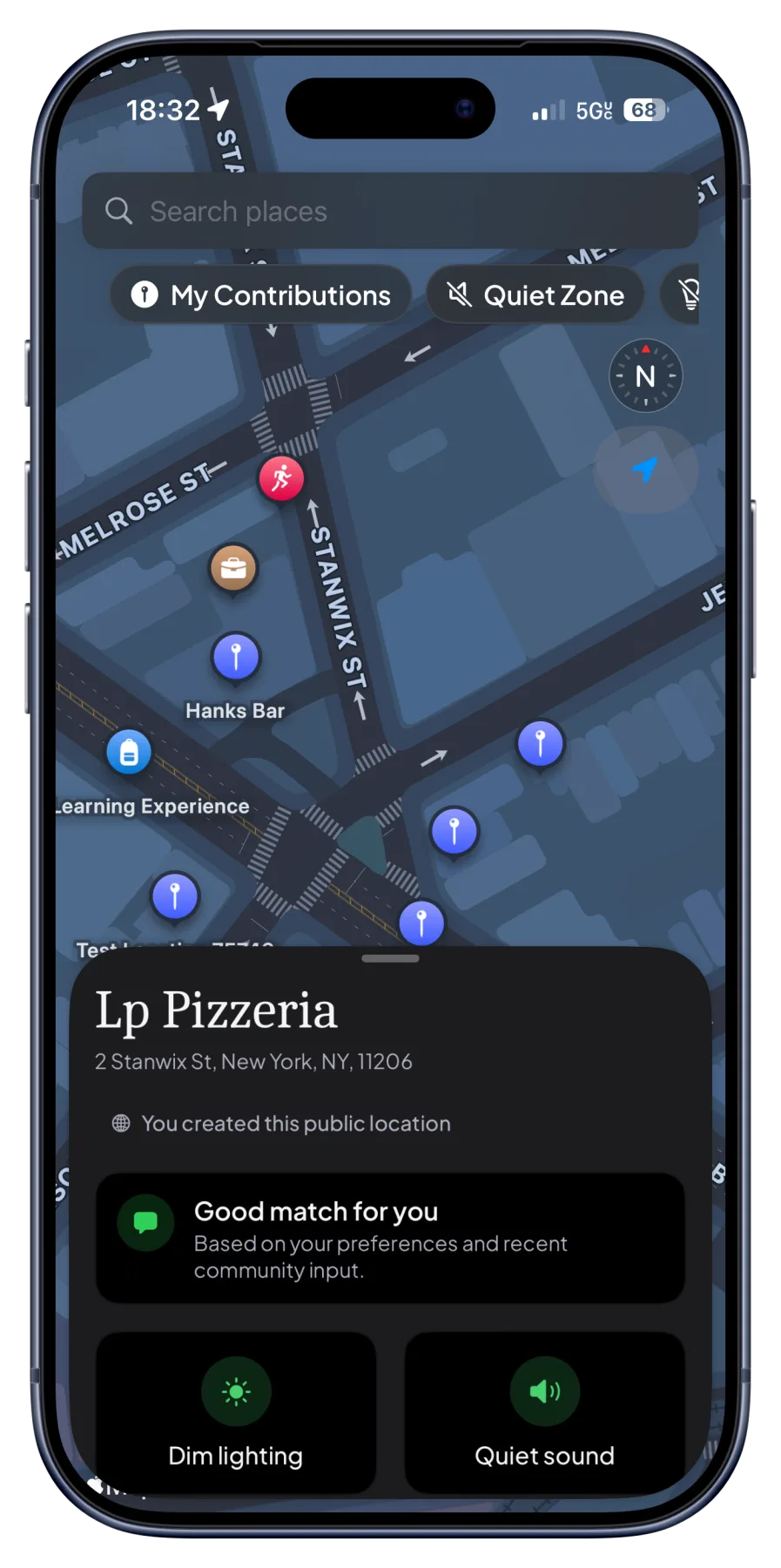
Crowdsourced Sensory Map
Find sensory-friendly places before you go
Use the SpectrumScan sensory map to explore cafes, shops, public spaces, and other places based on their light and sound environment. Know more about a space before you arrive.
- Know before you go: See light and sound information about a place before deciding whether it's right for you
- Find places that fit your needs: Explore places based on their sensory environment and your individual preferences
- Help others navigate: Share your own observations to help build a more useful sensory map for everyone
Built For Your Sensory Needs
Sensory sensitivity looks different for everyone.
Some people are sensitive to sound. Others to light, crowds, or combinations of sensory input. SpectrumScan gives you more information about your environment so you can make choices based on your own sensory needs.
Sensitive to sound
Loud, crowded, or unpredictable environments can be difficult to navigate, whether you experience general sound sensitivity, misophonia, or hyperacusis. SpectrumScan helps you understand the sound levels around you and in places you may want to visit.
Sensitive to light
Bright or intense lighting can make everyday environments uncomfortable, whether you experience general light sensitivity or photophobia. SpectrumScan gives you information about light levels so you can better understand the spaces around you.
Prone to sensory overload
Sometimes it's the combination of sensory inputs that becomes overwhelming. Knowing more about an environment before you enter it can take some of the uncertainty out of going somewhere new.
Looking for sensory-friendly places
Your ideal environment is personal. Explore crowdsourced sensory information to find places that may better match your preferences.
SpectrumScan is designed for anyone navigating sensory sensitivity, including autistic and neurodivergent people, people with migraines, ADHD, PTSD, and others who experience sensitivity to light or sound.
More Information. More Control.
Know more. Understand more. Choose with confidence.
SpectrumScan turns information about your environment into something you can use—to prepare for unfamiliar places, understand your sensory preferences, and communicate what you need.
Prepare
Know more before you go. Get a better sense of an environment before you arrive, so there are fewer surprises.
Understand
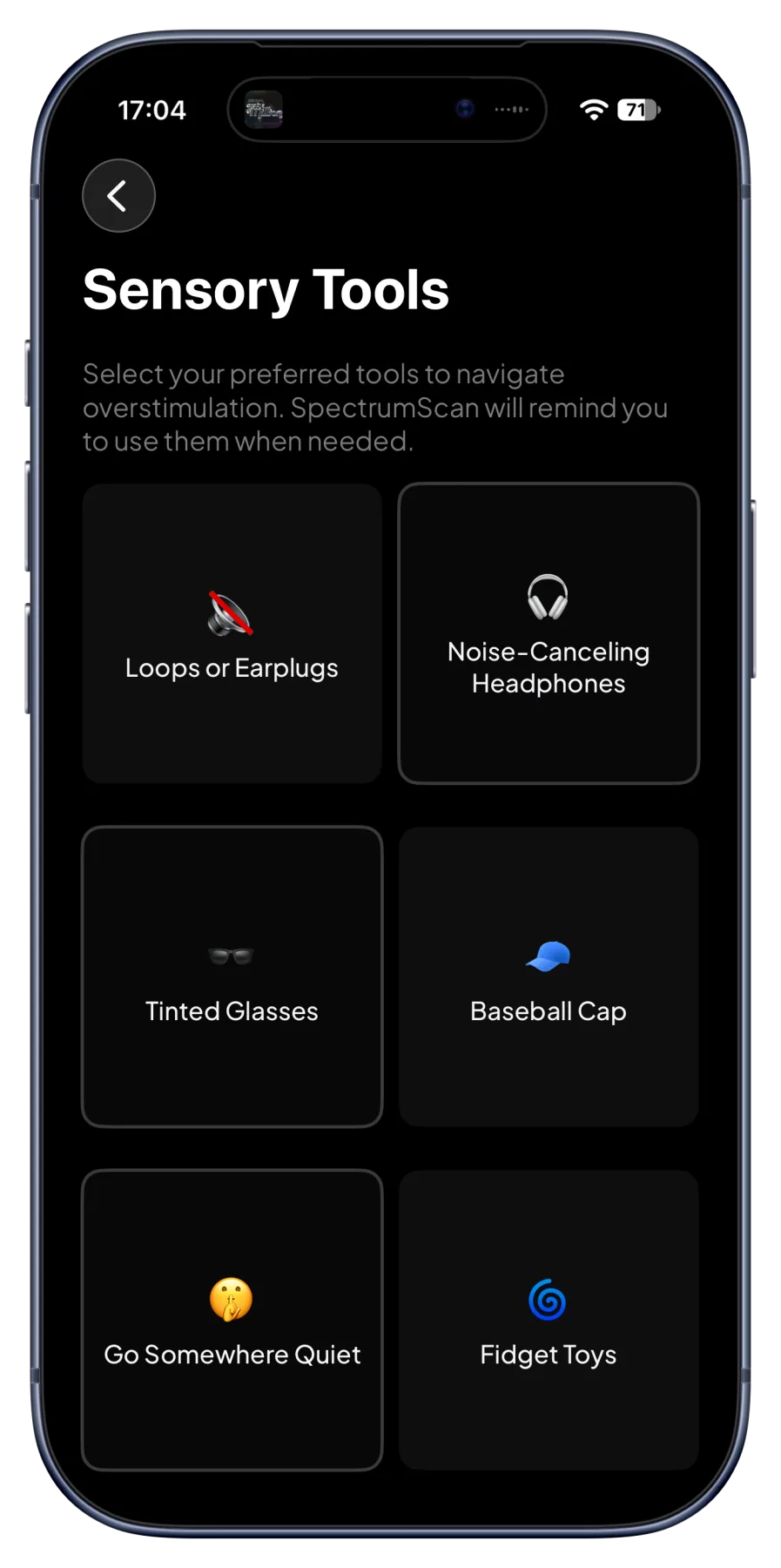
Learn what works for you. Recognize patterns in the light, sound, and environments that feel comfortable—or overwhelming—to you.
Advocate
Put your sensory needs into words. Use information about your environment to better communicate what works for you and what doesn't.










Frequently Asked Questions
What is SpectrumScan?
SpectrumScan is a sensory sensitivity management app that helps you understand the light and sound around you and explore the sensory environments of places before you visit. It combines real-time light and sound measurements with a crowdsourced sensory map to help you make more informed choices about the environments you enter.
Who is SpectrumScan for?
SpectrumScan is designed for anyone who experiences sensory sensitivity to light, sound, or their surrounding environment. This may include autistic and neurodivergent people, people with migraines, misophonia, ADHD, or PTSD, and others who experience sensory overload or sensory processing differences (sometimes called sensory processing disorder, or SPD). You don't need a diagnosis to use SpectrumScan. Everyone's sensory needs are different.
How does SpectrumScan measure light and sound?
SpectrumScan uses your phone's sensors to measure the light and sound levels in your environment. Sound is measured in decibels (dB) and light is measured in lux, giving you real-time information about the sensory environment around you. You can use these measurements to better understand your surroundings and learn which environments work best for your individual sensory needs.
What is a sensory map?
A sensory map provides information about the sensory characteristics of different places. SpectrumScan's crowdsourced sensory map lets you explore light and sound information contributed by the community for cafes, restaurants, shops, public spaces, and other locations. The goal is to give you more information about an environment before you arrive.
How can I find sensory-friendly places near me?
Use the SpectrumScan sensory map to explore places near you and see crowdsourced information about their light and sound environment. Rather than assuming one environment is "sensory-friendly" for everyone, SpectrumScan gives you information that can help you decide whether a place matches your individual sensory preferences.
Can SpectrumScan help with sensory overload?
SpectrumScan is designed to give you more information about the environments around you. If you experience sensory overload or overstimulation, understanding light and sound levels and knowing more about a place before you arrive may help you make choices that better fit your sensory needs. SpectrumScan does not predict, diagnose, prevent, or treat sensory overload.
Can SpectrumScan be useful for autistic and neurodivergent people?
Yes. Some autistic and neurodivergent people experience heightened sensitivity to light, sound, crowds, or other sensory input. SpectrumScan can provide information about light and sound in the surrounding environment and help users explore the sensory characteristics of places before visiting. Because sensory needs vary from person to person, SpectrumScan is designed around individual preferences rather than assuming the same environment works for everyone.
Can SpectrumScan be useful for people with migraines and light sensitivity?
For people who experience light or sound sensitivity with migraines, including photophobia, information about the sensory environment may be useful when deciding where to go or understanding different surroundings. SpectrumScan provides information about environmental light and sound so users can make their own decisions based on their individual needs. SpectrumScan is not a medical device and does not diagnose, prevent, or treat migraine.
How does contributing to SpectrumScan help others?
When you contribute sensory information about a place, you help build the crowdsourced SpectrumScan sensory map. As more people contribute, the map can provide a richer picture of light and sound environments across the places we live, work, and gather. Aggregated sensory data can also help communities and organizations better understand sensory accessibility in shared spaces.
Make the sensory world a little more predictable.
Measure the light and sound around you. Discover places that fit your sensory needs. Help build a more sensory-accessible world.