Your sensory environment, made visible.
Measure the light and sound around you, explore sensory information about places before you go, and contribute to a crowdsourced sensory map.

Available for iPhone · Free to download
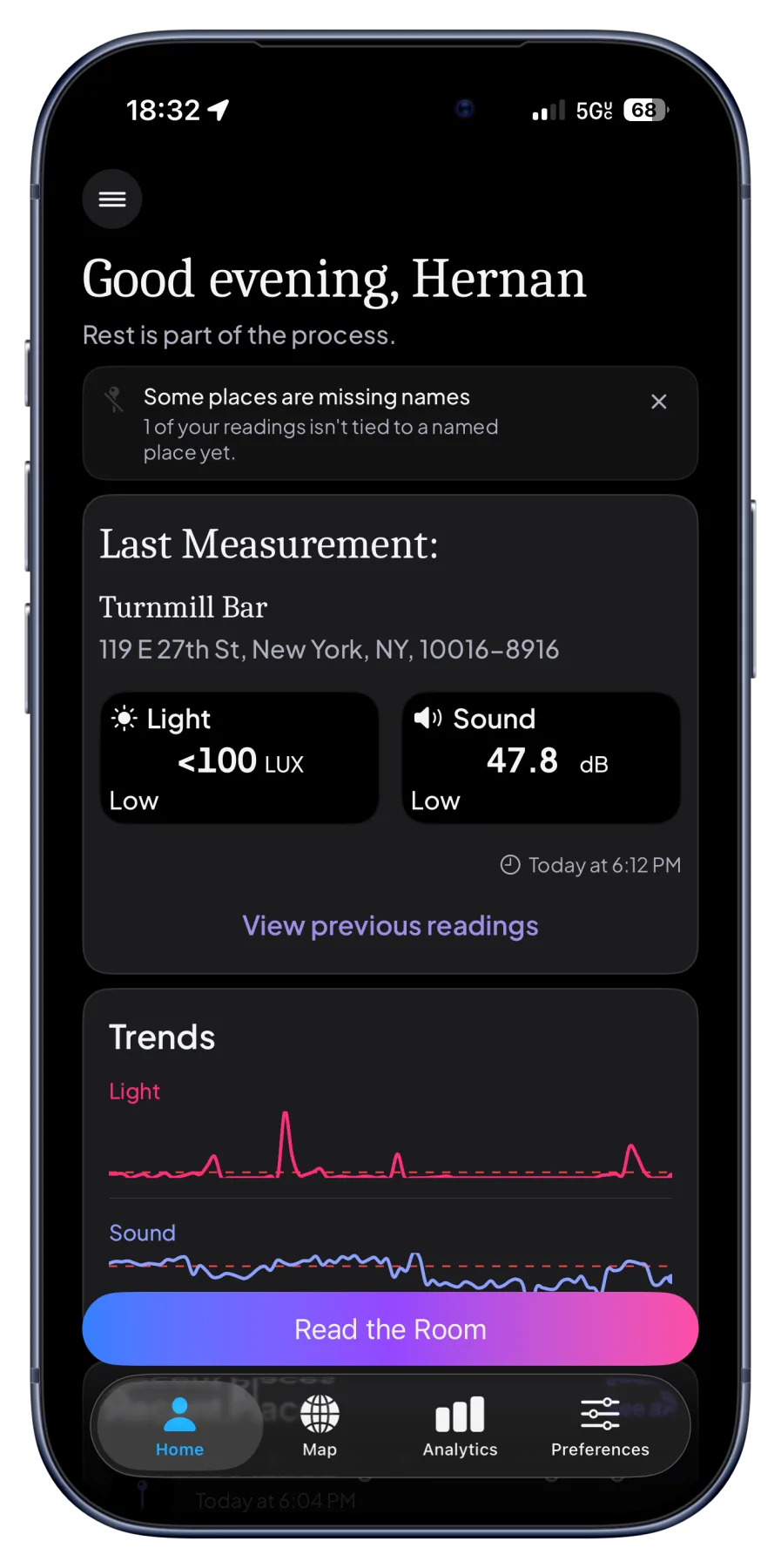
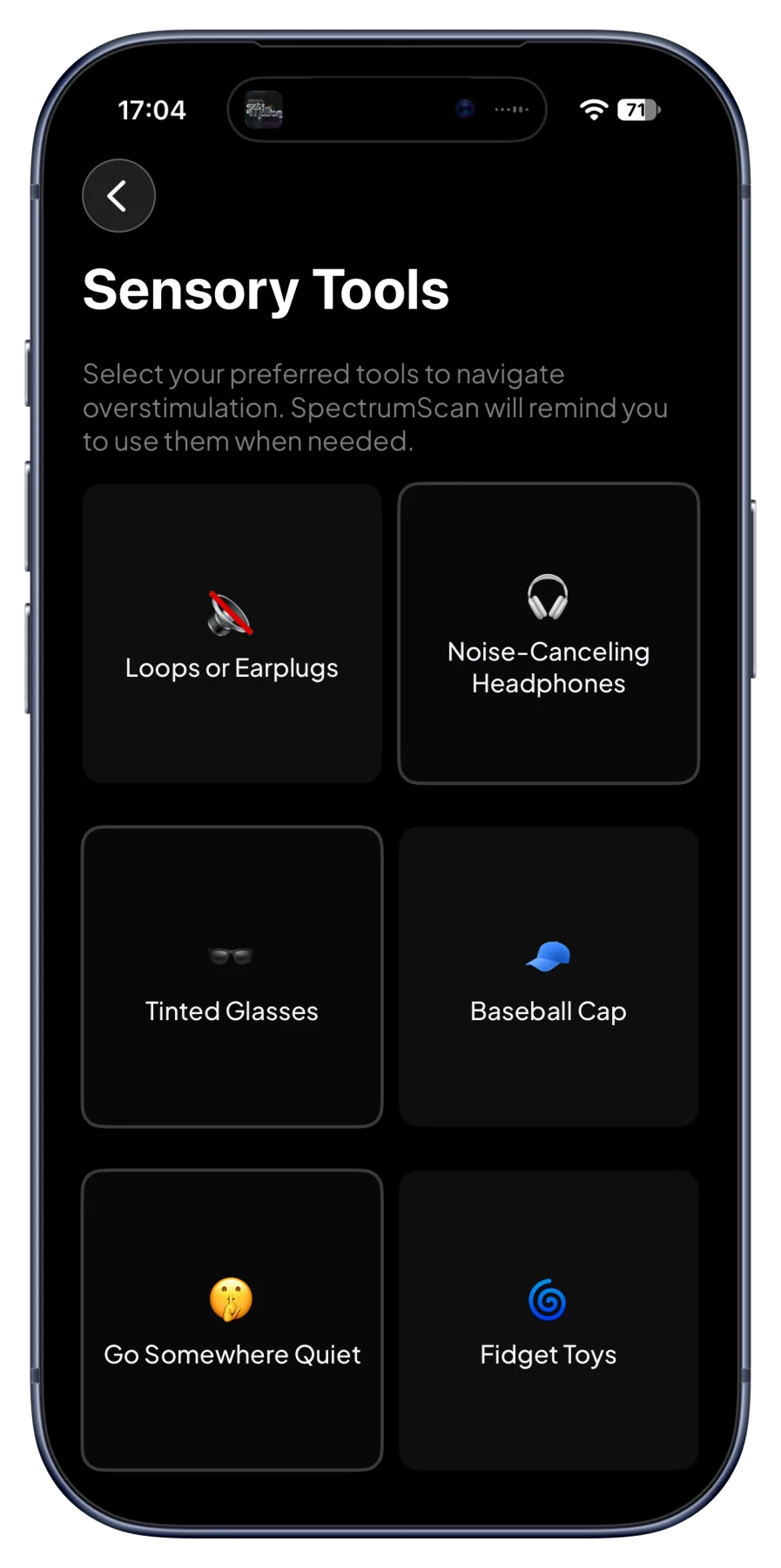
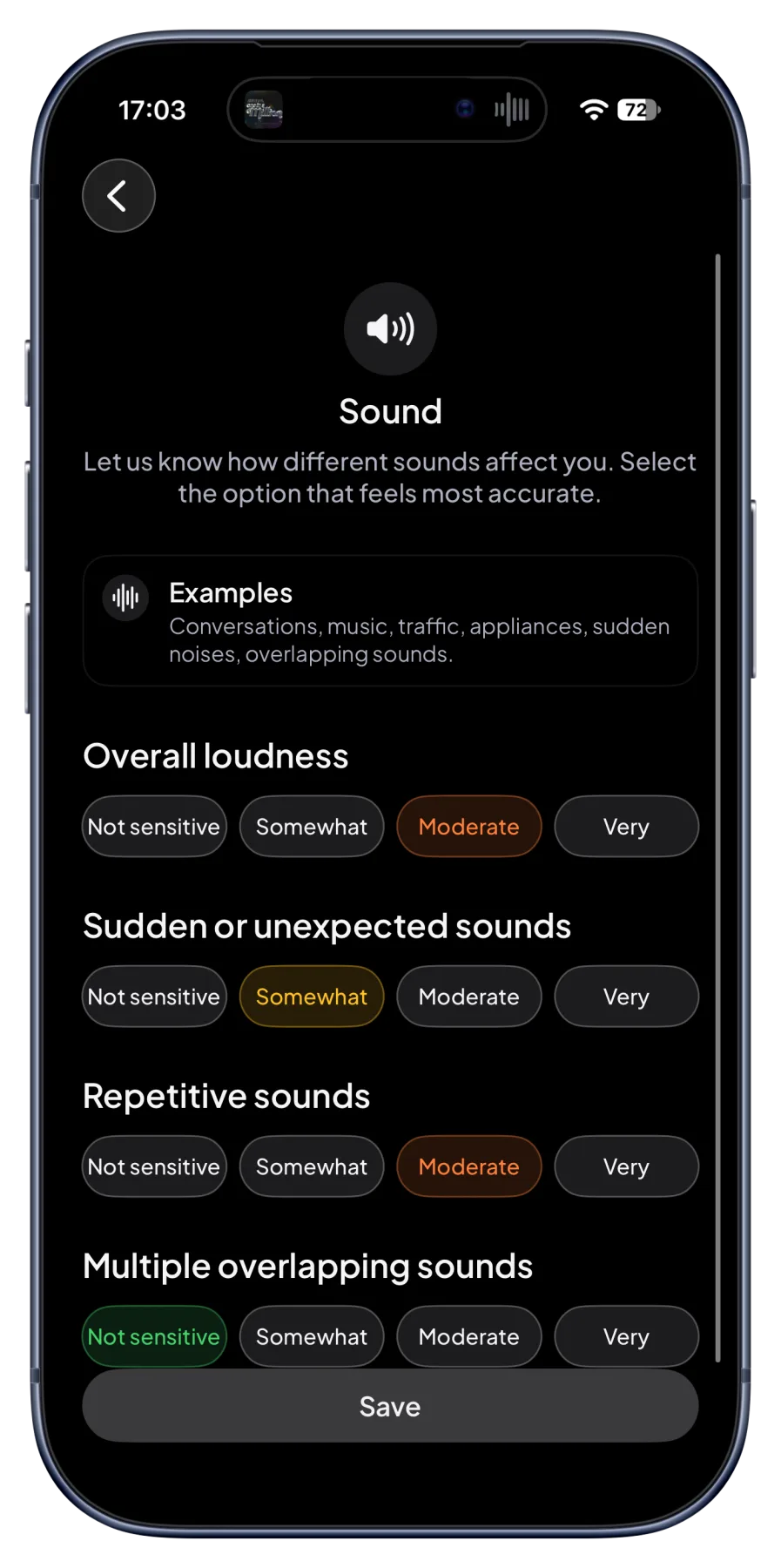
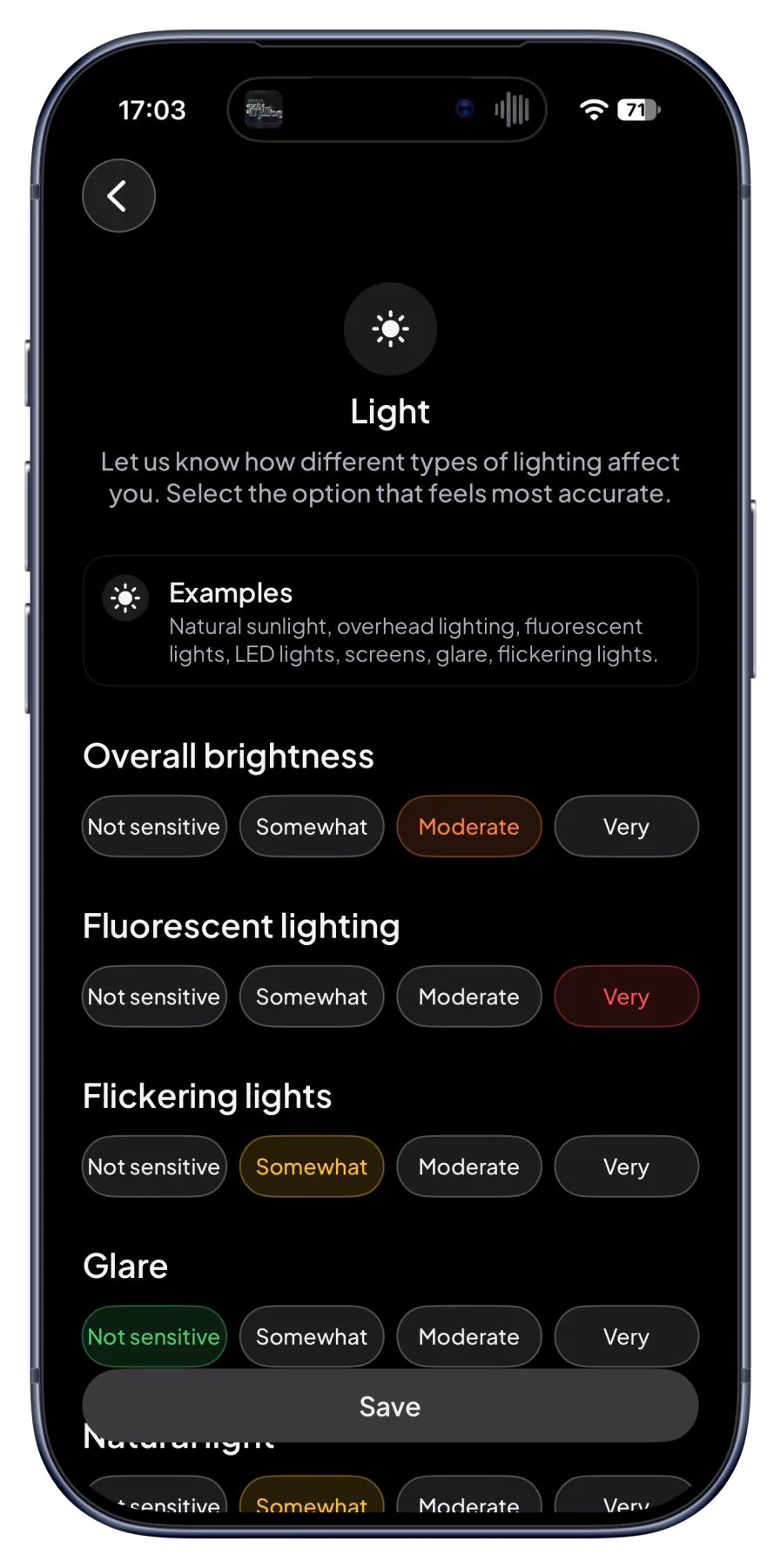
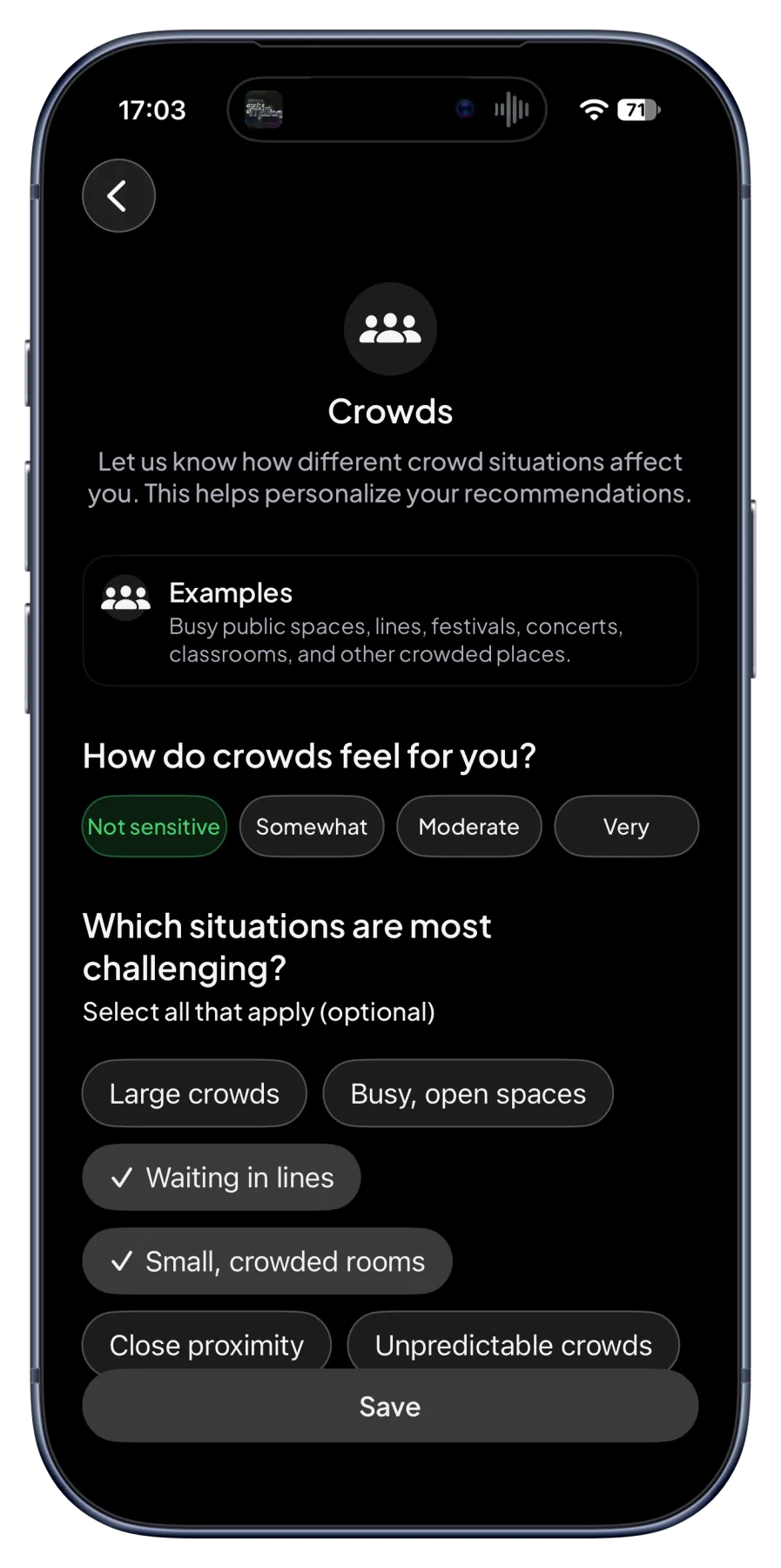
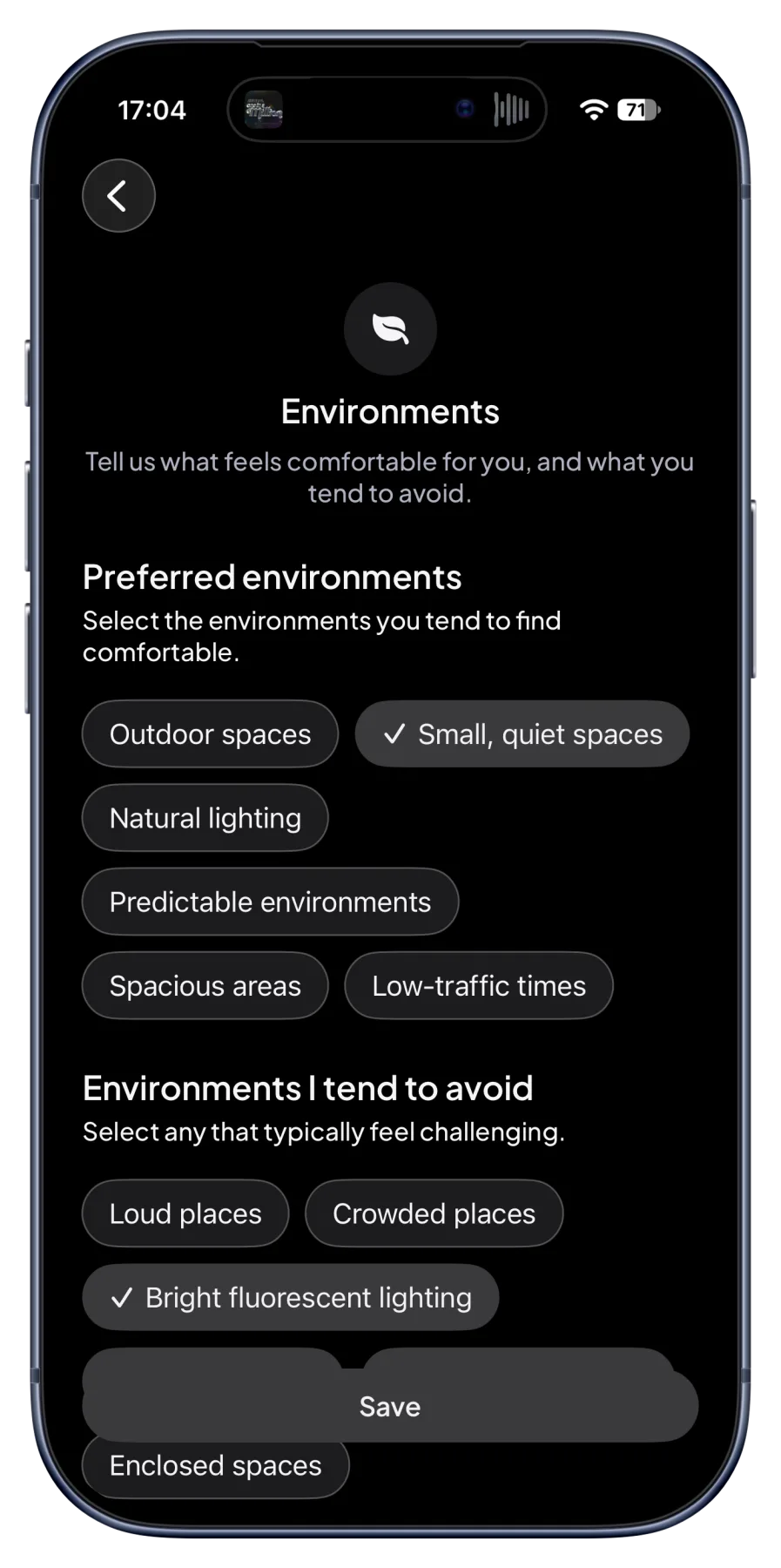
PERSONAL MONITOR
Understand the light and sound levels around you.
SpectrumScan turns your phone into a real-time sensory monitor, giving you information about two important parts of your environment: sound and light.
- Sound, measured in decibels (dB), so you know how noisy your environment really is
- Light, measured in lux, so you know how bright your environment really is
- Real-time measurements that put numbers behind what you're experiencing
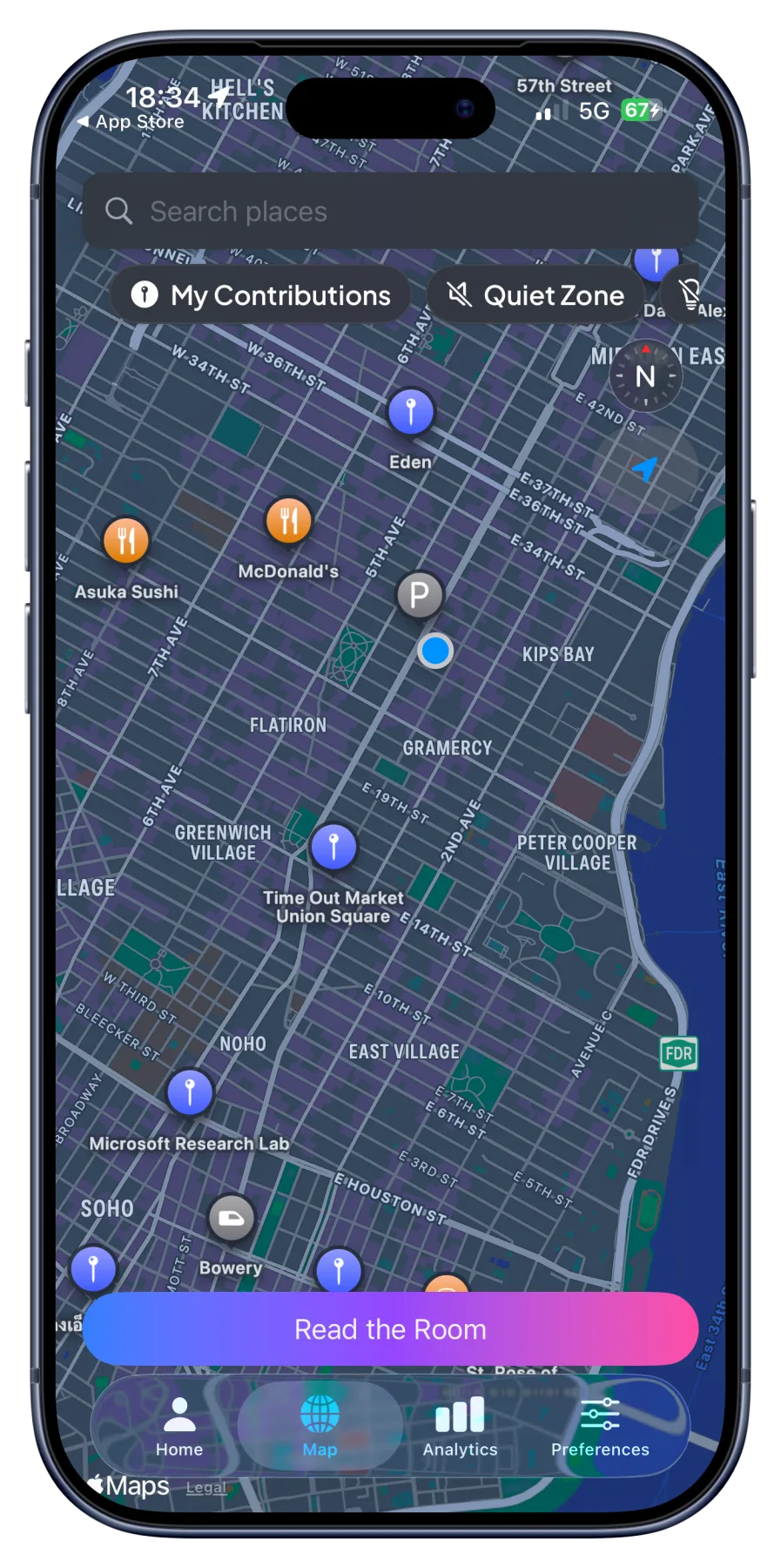
SENSORY MAP
Know more about a place before you go.
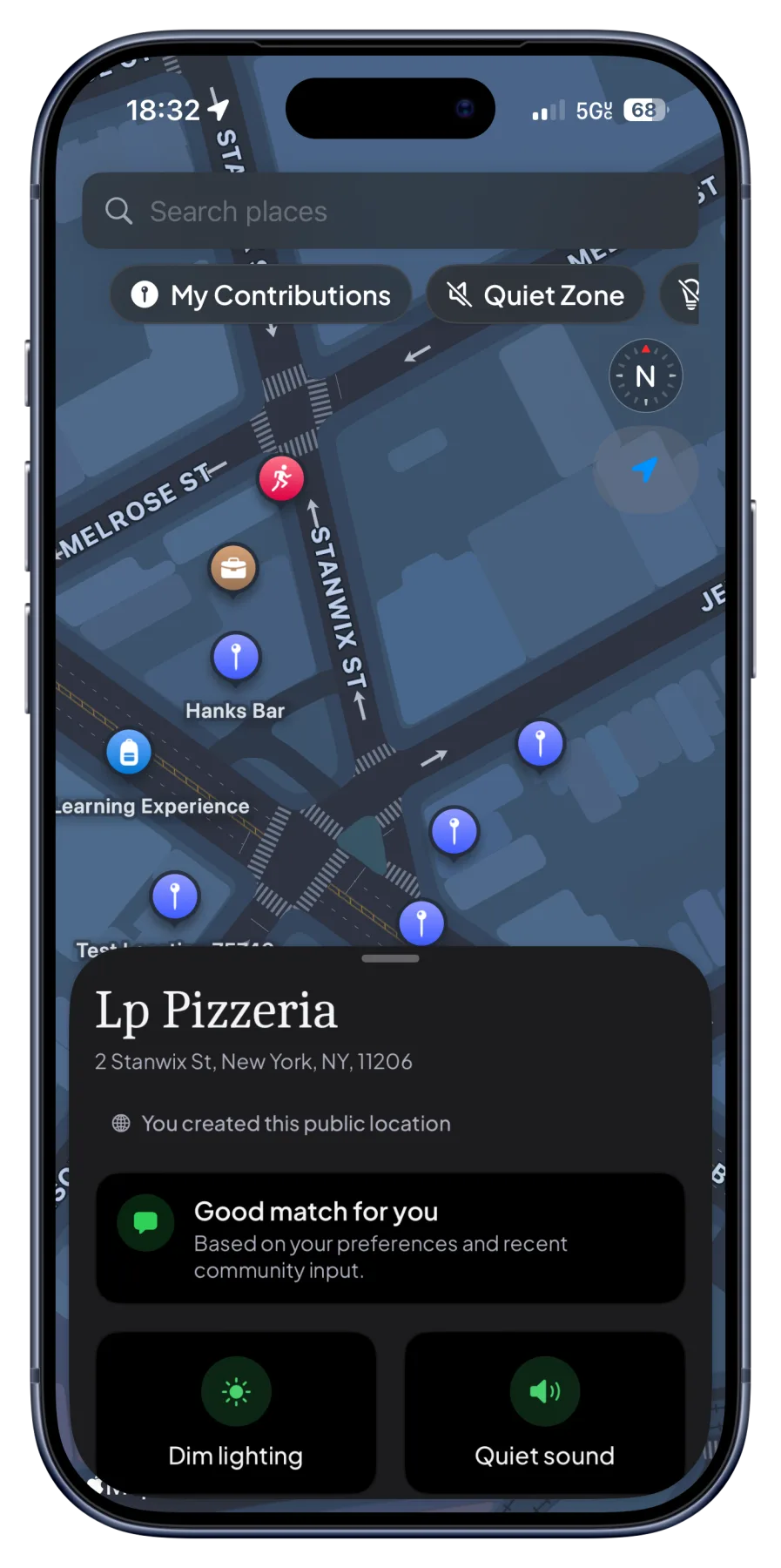
Explore crowdsourced light and sound information for places around you, so you can get a better sense of the sensory environment before you arrive.
- Browse nearby restaurants, cafes, shops, and public spaces on the map
- View contributed light and sound measurements for each location
- Decide for yourself whether a place matches your sensory needs
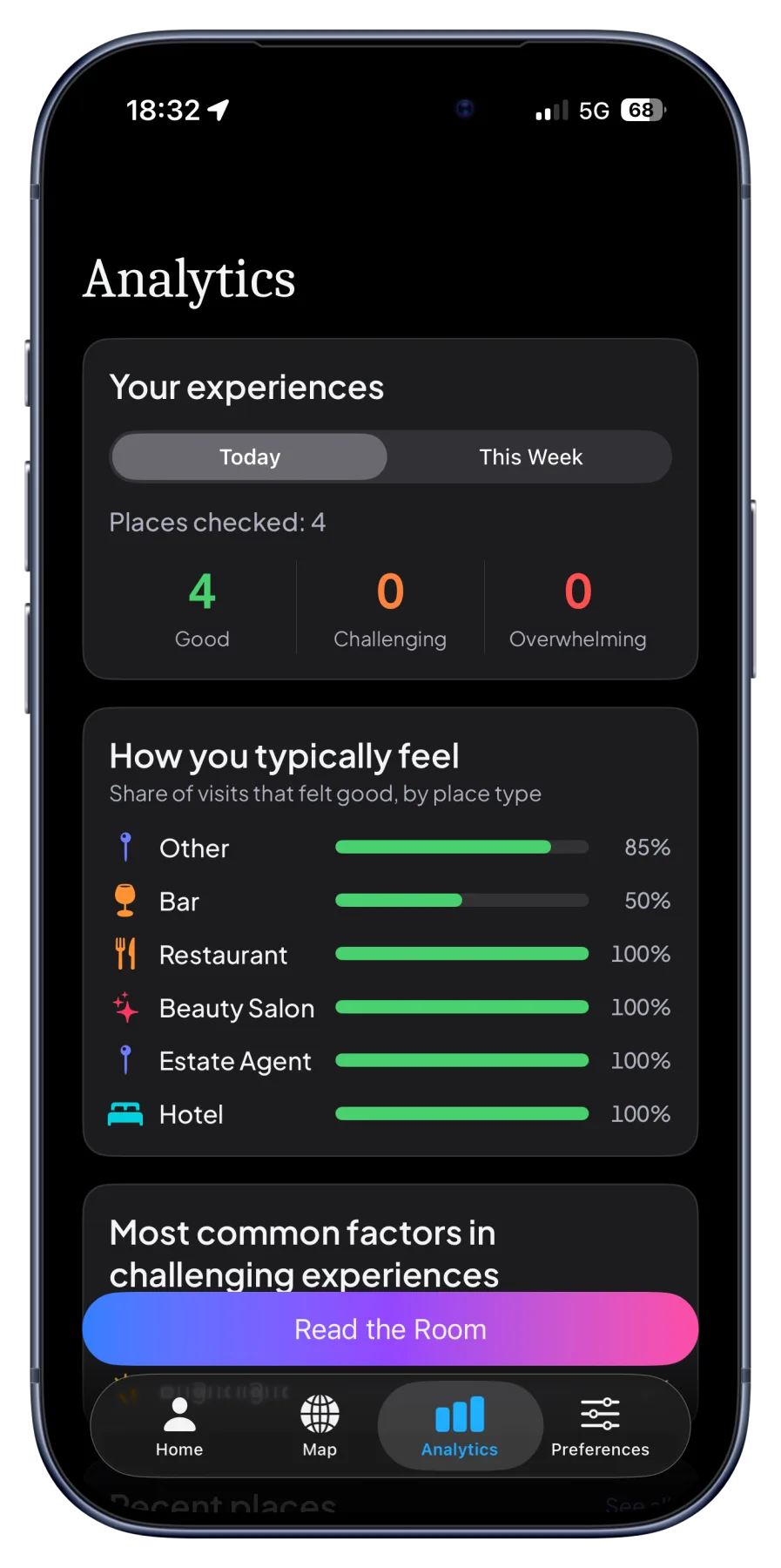
See the patterns
Clear reports that tell your story
Track how your sensory environment shifts over days and weeks, turning invisible experiences into something you can share and act on.
- Visual reports to track patterns over time
- Calendar widgets to see the bigger picture
- Evidence to support self-advocacy and accommodations
- Understand what drains and restores your sensory battery
From Individual Insight To Shared Understanding
Every measurement makes the map more useful.
When someone contributes a light or sound measurement through SpectrumScan, they add another piece to our understanding of the sensory environment. As more people contribute across more places and times, those individual measurements can become something much larger: a crowdsourced dataset showing how sensory environments vary across the places where we live, work, travel, and gather. Better data can help individuals make more informed choices—and help organizations and communities better understand sensory accessibility at scale.
Measure
Capture a light or sound reading in the moment.
Contribute
Share it to the crowdsourced sensory map.
Map
See how sensory environments vary across places.
Understand
Use patterns in the data to make more informed choices.
BUILT AROUND YOUR SENSORY NEEDS
Everyone experiences the sensory world differently.
You might be sensitive to sound, light, or a combination of sensory input. SpectrumScan gives you more information about your environment so you can make choices based on what works for you.
Sensitive to sound
Whether it's general sound sensitivity, misophonia, or hyperacusis, understand sound levels in decibels (dB) and explore information about the noise levels of places you may want to visit.
Sensitive to light
Whether it's general light sensitivity or photophobia, understand brightness in lux and explore information about the light environments of places around you.
Prone to sensory overload
Take some of the uncertainty out of unfamiliar environments by knowing more about their light and sound before you arrive.
Looking for sensory-friendly places
Browse the crowdsourced sensory map to explore cafes, shops, and other places, and find ones that may better match your light and sound preferences.
SpectrumScan is designed for anyone navigating sensory sensitivity, including autistic and neurodivergent people, people with migraines, ADHD, PTSD, and others who experience sensitivity to light or sound. You don't need a diagnosis to use SpectrumScan.
SPECTRUMSCAN IN EVERYDAY LIFE
More information when you need it.
Imagine you're meeting friends at a café you've never visited before. You're sensitive to noisy environments, and you don't know what to expect.
Before you go
Check the sensory map
You check the café on SpectrumScan and see light and sound measurements contributed by other visitors. It gives you a better idea of the environment before you decide to go.
While you’re there
Check the Personal Monitor
You open the Personal Monitor and see what the café currently measures in decibels and lux, putting numbers behind the environment you're experiencing.
Before you leave
Contribute a measurement
You contribute a measurement of your own, adding another data point for the next person wondering what that café might be like.
A café is just one example. SpectrumScan can help you understand the sensory environment of restaurants, shops, workplaces, campuses, public spaces, and the other places you encounter every day.
HOW YOUR DATA WORKS
Built to inform, not define your experience.
SpectrumScan gives you information about your environment. It also recommends whether a location will fit your needs or not.
Objective measurements
Light and sound, measured in familiar units.
SpectrumScan measures environmental sound in decibels (dB) and light in lux, giving you consistent information you can use to compare environments.
Crowdsourced information
A clearer picture with every contribution.
Sensory Map information is crowdsourced voluntarily by other members of the community. Data gets published anonymously to ensure your privacy.
Your experience is personal
The numbers are information. What they mean to you is individual.
Two people can experience the same environment very differently. SpectrumScan learns about your preferences and grows with you as you discover new preferences and experiences.
PRIVACY & DATA
Your data should be easy to understand, too.
SpectrumScan is built around crowdsourced information, and we believe you should understand what happens when you contribute.
What you contribute
When you submit a measurement, SpectrumScan records the light and sound levels, the place, and the time it was taken.
What others can see
Your measurement becomes part of the public sensory map for that place. SpectrumScan doesn't display your name or identity alongside the data you contribute.
How your data is used
Contributed measurements help build the SpectrumScan sensory map. Aggregated sensory data may also be used to help organizations and communities better understand sensory environments and accessibility.
You contribute
Light + sound, place + time.
SpectrumScan
Your measurement joins the sensory map.
Aggregated insights
Helps reveal patterns in the sensory environments we share.
Frequently Asked Questions
What is SpectrumScan?
SpectrumScan is a sensory sensitivity management app that helps you measure light and sound in your environment, explore crowdsourced sensory information about places, and contribute measurements to a sensory map.
Who is SpectrumScan for?
SpectrumScan is designed for anyone who wants to better understand the sensory environment around them, particularly people who experience sensitivity to light or sound. This can include autistic and neurodivergent people, people with migraines, misophonia, hyperacusis, ADHD, or PTSD, and others who experience sensory overload or sensory processing differences (sometimes called sensory processing disorder, or SPD). You don't need a diagnosis to use SpectrumScan.
How does SpectrumScan measure light and sound?
SpectrumScan measures environmental sound in decibels (dB) and light in lux, giving you real-time information about the environment around you. We'll share more detail on exactly how the app calculates each measurement as that work is verified.
What is the SpectrumScan sensory map?
The sensory map is a crowdsourced map of light and sound information contributed by SpectrumScan users. It lets you explore available sensory information about places before you visit and add measurements of your own.
How can I find sensory-friendly places near me?
Use the SpectrumScan sensory map to explore nearby places and see available light and sound information. Because sensory needs differ from person to person, SpectrumScan doesn't label a place as sensory-friendly for everyone. Instead, it gives you information to help you decide whether an environment may work for you.
Can SpectrumScan help with sensory overload?
SpectrumScan can give you more information about the light and sound around you and about unfamiliar places before you arrive. If you experience sensory overload or overstimulation, you can use that information to make choices based on your individual sensory needs. SpectrumScan does not predict, diagnose, prevent, or treat sensory overload.
Why might the measurements for the same place be different?
Sensory environments change. A restaurant might be quiet in the afternoon and much louder during dinner, while natural light, artificial lighting, crowds, events, and other factors can change conditions throughout the day. Each SpectrumScan measurement reflects the environment at the time it was taken.
Is SpectrumScan a medical app?
No. SpectrumScan provides information about environmental light and sound. It does not provide medical advice, diagnose medical conditions, or replace professional medical care.
See your sensory world differently.
Measure the light and sound around you, explore sensory information about the places you go, and help make the sensory world more visible for everyone.
Free to download · Available for iPhone